Published - 26th Feb 2026
Material selection considerations for performance-critical components
Selecting the right metal is a key part of precision CNC machining. The material influences part performance, dimensional stability and surface finish, while also shaping cycle times, tooling strategy and overall production cost.
For engineers and procurement teams working in demanding sectors such as aerospace, defence, rail and energy, material decisions are closely tied to programme risk. Metal strength, corrosion resistance and weight must be considered alongside machinability, availability and compliance requirements to determine the best metal for CNC machining.
This guide outlines the metals most commonly used in precision CNC machining and supports informed material selection for customers reviewing CNC machining services for performance-critical applications.
Material selection affects component performance, production efficiency and delivery reliability. The machining strategy for your component, inspection requirements, lead time and overall cost will all be impacted by your choice of metal.
For engineers, the focus is meeting strength and tolerance requirements. For procurement teams, cost stability, availability, certification and supply risk may be equally important. By balancing these requirements carefully the best material can be selected at specification stage, reducing the risk of extended cycle times, distortion, tooling challenges or supply delay.
Material selection should reflect both the functional demands of the component and the realities of manufacturing. The following considerations help guide metal specification in precision engineering environments.
Mechanical strength and load requirements
The material must withstand specified operational loads, fatigue and environmental exposure. Higher-strength alloys may reduce machinability, so performance requirements should be clearly defined to avoid over-specification. Aerospace material grades, for example, are often specified in accordance with internationally recognised standards.
Weight and strength-to-weight ratio
In weight-sensitive sectors such as aerospace and rail, aluminium and titanium alloys are often preferred. Where mass is less critical, steels may offer a more economical solution.
Corrosion resistance
Components exposed to moisture or chemicals require appropriate resistance. Stainless steels and certain nickel alloys reduce reliance on secondary coatings to achieve resistance, improving durability.
Temperature stability
Some applications involve sustained heat or thermal cycling. Not all metals retain strength under elevated temperatures, so operating range should inform material choice early.
Machinability
Machinability affects cycle time, tool wear and production cost. Higher machinability grades support efficient cutting and surface finish consistency. Lower machinability alloys require more controlled setups and longer machining time.
Dimensional stability
Materials prone to internal stress may distort during machining, particularly in thin-walled or large components. Stable grades reduce tolerance risk and rework.
Cost, availability and certification
Material price must be considered alongside lead time and certification requirements. Established grades with reliable supply chains simplify procurement and compliance.
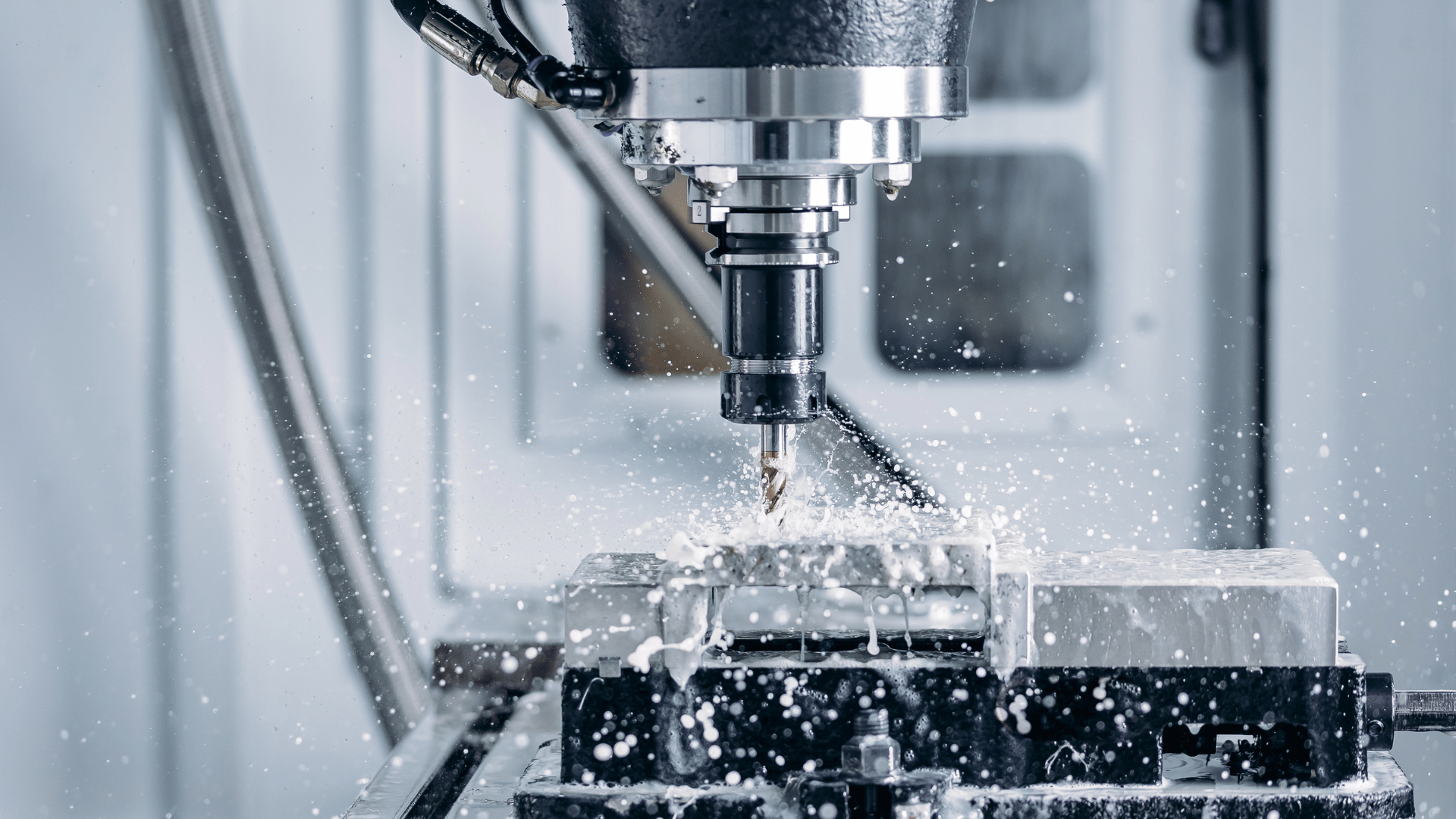
The best metal for CNC machining depends on the application, including performance requirements, environmental conditions and production constraints. Material properties such as strength, corrosion resistance and heat tolerance vary significantly between alloy families, as documented by established materials engineering bodies.
The following metals are among the most commonly specified in precision CNC machining across performance-critical sectors:
Aluminium alloys
Aluminium is widely used where weight and machinability are priorities.
Advantages
Grades such as 6061 and 7075 are common in aerospace and structural applications.
Considerations
Lower strength than many steels and may require surface treatment for wear resistance.
Carbon and alloy steels
Steels are frequently specified for strength and durability.
Advantages
Machinability varies by grade. Higher-strength alloys require more controlled machining.
Considerations
Carbon steels require surface protection in corrosive environments.
Stainless steels
Selected where corrosion resistance is essential.
Advantages
Common grades include 304, 316 and 17-4PH.
Considerations
Longer cycle times and increased tooling demand compared to aluminium.
Titanium alloys
Often used in aerospace and defence.
Advantages
Considerations
Lower machinability and higher material cost.
Brass and copper alloys
Used in precision and electrical components.
Advantages
Considerations
Lower structural strength than steels.
High-performance nickel-base alloys
Used in demanding, high-temperature environments.
Advantages
Considerations
Challenging to machine and typically longer production cycles. Metaltech Precision regularly machines high-performance and exotic alloys for demanding aerospace and energy applications.
Soft magnetic materials (e.g. Remko)
Soft magnetic irons such as Remko are specified in applications where magnetic permeability and controlled magnetic performance are critical.
Typical uses
Machining considerations
Machining soft magnetic materials can present unique challenges, including sensitivity to stress and the need to preserve magnetic properties during machining. Process control is important to avoid introducing distortion or affecting performance characteristics.
These materials are typically selected for specialist applications rather than general structural use.
| Material | Relative machinability* | Strength level | Corrosion resistance | Typical applications |
|---|---|---|---|---|
| Aluminium alloys | High | Moderate to high | Good | Aerospace structures, housings, lightweight components |
| Carbon steels | Moderate to high (grade dependent) | High | Low without coating | Shafts, brackets, load-bearing parts |
| Stainless steels | Moderate to low | Moderate to high | High | Marine parts, energy components, exposed assemblies |
| Titanium alloys | Low to moderate | High | Excellent | Aerospace fittings, defence components |
| Brass | Very high | Low to moderate | Moderate | Precision fittings, electrical components |
| Nickel-base alloys | Low | Very high | Excellent | High-temperature aerospace and energy parts |
| Soft magnetic iron (e.g. Remko) | Low to moderate | Moderate | Low | Aerospace magnetic components, electromagnetic assemblies |
*Relative machinability is indicative and varies by specific grade and heat treatment.
Material choice is often driven by performance requirements, but avoidable issues can arise when specification decisions are made in isolation from manufacturing considerations.
The following pitfalls are common in precision engineering projects:
Over-specifying grade: Selecting a higher-grade alloy than required increases cost and machining time without adding functional benefit.
Ignoring machinability: Alloys that meet strength requirements may reduce production efficiency through extended cycle time and tooling wear.
Overlooking distortion risk: Materials with internal stresses can move during machining, affecting tolerance control.
Failing to confirm availability and certification: Less common grades may extend lead times or complicate compliance in regulated sectors.
Many material-related challenges arise not from performance requirements, but from limited visibility of how the material behaves during machining. Early technical review can prevent avoidable cost, distortion and programme delay.
Material selection is most effective when considered alongside your manufacturing partner’s machining capability, inspection requirements and compliance obligations. Metaltech Precision has the expertise and experience to support customers with practical input at specification stage, supported by extensive machining capability and trusted processes.
Engineering capability and process depth
Metaltech Precision operates extensive CNC turning capability, including fixed head turning, sliding head turning and vertical turning centres, alongside multi-axis milling. This means that material selection can be assessed against proven machining strategy, tolerance control and production efficiency.
Quality management and certification
Metaltech Precision is AS9100 certified and operates a structured quality management system. The business is registered with JOSCAR, supporting defence and aerospace supply chain procurement, and has achieved Cyber Essentials assurance evidencing enhanced data protection, supply chain security and a reduced risk of production disruption.
Compliance and traceability
Material traceability, CMM inspection and controlled documentation processes provide audit-ready compliance.
Group manufacturing capability
As part of Expromet Technologies Group, including metallic manufacturers Tiverton Fabrications, Metaltech Precision operates within a wider UK manufacturing network offering extended fabrication, machining, casting and engineered assembly capability.
This broader capability supports customers seeking aligned supply across multiple manufacturing processes while maintaining consistent quality standards.
Selecting the best metal for CNC machining requires alignment between performance requirements and manufacturing practicality. Capabilities relating to strength, corrosion resistance and temperature must be balanced with machinability, tolerance control and supply stability: reviewing material selection alongside machining strategy in this way supports more effective design-for-manufacture outcomes.
By working with an experienced supply chain partner like Metaltech Precision, procurement teams can gain early clarity on the best material to reduce risk and support predictable production outcomes.
Metaltech Precision supports customers across a range of industry sectors with practical material selection for the manufacturing of performance-critical metal components, backed by AS9100 certification for demanding sectors such as aerospace and defence, EN15085 certification for rail vehicles and components, JOSCAR registration and ISO 3834 and EN 15805 certified welding.
If you are reviewing material options for a precision component, contact Metaltech Precision to discuss specification, machinability and compliance requirements at an early stage.
What is the best metal for CNC machining?
There is no single best metal. The right choice depends on strength requirements, corrosion exposure, temperature range and cost. Aluminium and brass offer high machinability, while steels, titanium and nickel alloys are selected for higher strength or environmental resistance.
Which metals are easiest to machine?
Aluminium and brass are generally among the easiest metals to machine. They allow higher cutting speeds, consistent tool life and good surface finish. Specific grades and heat treatments can influence machinability.
How does material choice affect machining cost?
Material selection influences cycle time, tool wear and inspection complexity. Alloys with lower machinability often require slower cutting speeds and specialised tooling, increasing production time and cost.
Which metals are suitable for corrosion-resistant CNC parts?
Stainless steels, certain aluminium grades and nickel-based alloys are commonly used where corrosion resistance is required. The correct grade depends on environmental exposure and compliance requirements.
Does titanium take longer to machine?
Yes. Titanium typically requires controlled cutting speeds and heat management, which can extend cycle time compared to aluminium or carbon steel. Its higher raw material cost also contributes to overall part cost.
If you have a project, talk to our experienced sales team
Contact usAccess our library of images, videos, vacancies and latest news.
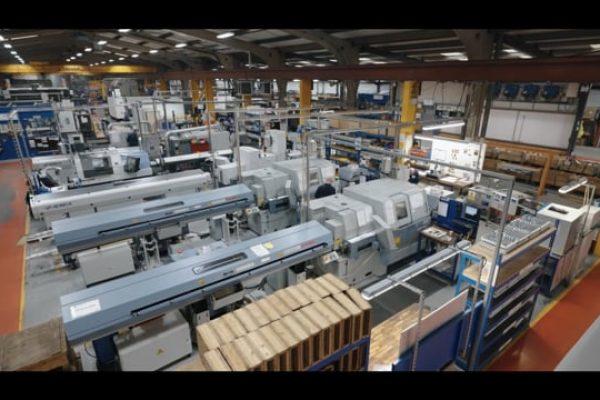
This gallery provides an insight into our work, our team and our impeccable quality.
A comprehensive gallery showcasing our expertise in turning, milling and general machining.
Download our company brochure here.
Looking for a new role? See our latest jobs here.

Articles, features, latest work and general company updates.